

One of my clients recently said something that has really stayed with me:
"We don't plant for death."
They're right. Newly planted trees and shrubs need enough water to establish healthy root systems often for up to 3 years. Allowing them to fail simply means replacing plants, wasting resources and increasing the carbon footprint of a garden. But equally, I don't believe we should be creating gardens that rely on treated drinking water year after year (or indeed ideally at all long term) or consistent watering 2-3 x a week in perpetuity.
The real challenge I think is designing beautiful gardens and landscapes that need very little to no water intervention once established in our increasingly unpredictable climate.
For me that starts with looking back to the past at what they did and fusing it with the best new soil science and horticultural research. It goes beyond right plant right place into designing and encouraging aesthetics and building in safeguards appropriate for our more volatile climate. But where do you start? For me it begins for the local gardens around our Teddington office it begins in the soil.
Healthy soil, healthy garden. A key way to help established gardens in Surrey and around the thames path where we garden is by adding organic matter and improving the soil structure. Organic matter acts like a sponge, holding onto more moisture and holding onto it for longer. Mulching with organic matter over the top of your planting beds and around trees reduces evaporation and protects soil life.
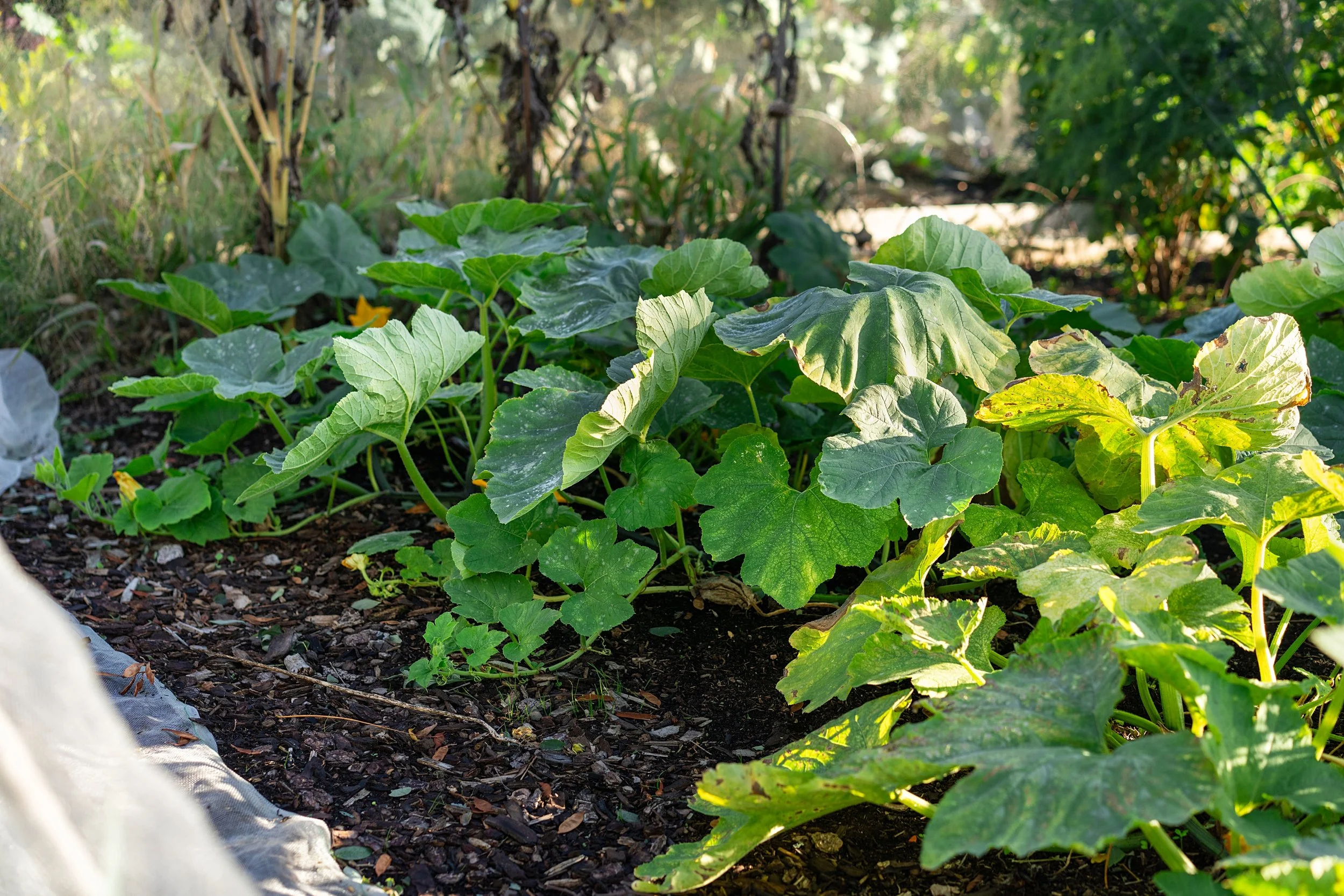
My own allotment is mulched with around 3 inches of compost, locking in moisture.
It is though not just about the soil love. You need to choosing plants for new schemes and doing ‘edits’ of existing schemes that are suited to local conditions and the sub soil you are in, meaning they'll naturally require less additional watering as the home you’ve given them works with their root system. We do this by researching the sub soil and topsoil of all our designed schemes meaning we are making recommendations that don’t just look good but actually are more likely to be successful. For our regular gardening clients we keep notes and switch out things slowly when it is clear they are not able to adapt. Remember, we don’t plant for death!
Another aspect we all need to more urgently consider is rainwater harvesting rather than sending it straight into drains and here I think is where the past overs beautiful ideas.
In 2022, I travelled to southern Spain to study traditional and contemporary approaches to water capture. What struck me wasn't simply how efficiently water was used, it was how beautifully it was celebrated. Rainwater channels became architectural features. Courtyards gently directed water towards planting. Small rills, cisterns and storage tanks were integrated into the landscape rather than hidden away.
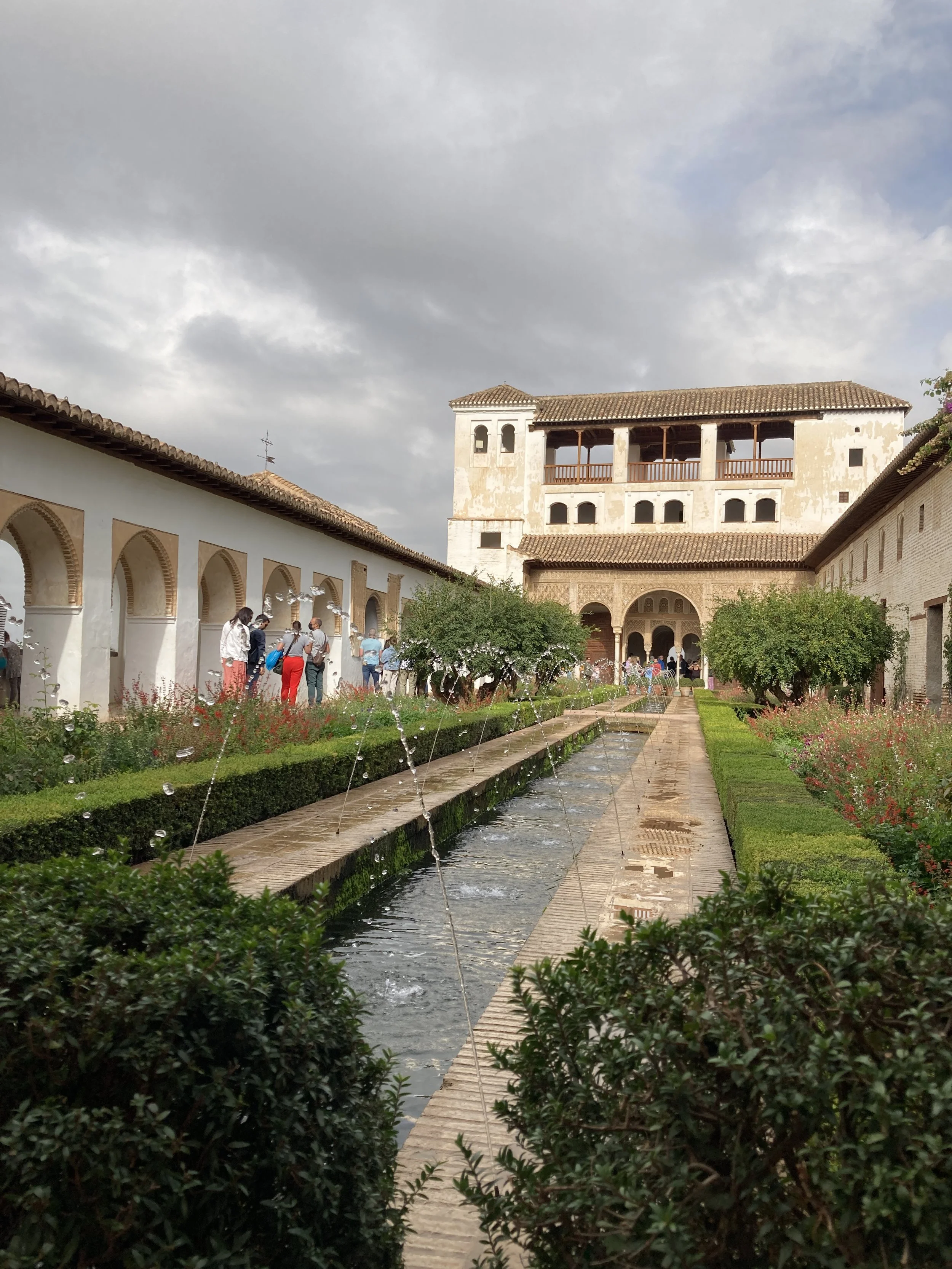
It was practical, elegant and utterly inspiring.
As our climate changes, I believe British gardens can learn from this approach. Water storage doesn't have to mean an ugly plastic tank tucked behind a shed. It can become part of the design.
Simple measures can make a remarkable difference:
Install rainwater butts, or better still, connect multiple butts together.
Consider underground storage tanks where budgets allow.
Shape the land to create shallow depressions that slow and hold rainfall around planting.
Direct downpipes into rain gardens or planted swales.
Increase soil organic matter and mulch annually.
Choose resilient planting adapted to hotter, drier summers.
Water deeply during establishment rather than little and often.
These ideas don't just reduce water use; they create healthier, more resilient gardens that continue to thrive as our climate changes.
I'm always interested in working with clients who want to think differently about water. If you're planning a new garden, let's design somewhere that's beautiful, regenerative and prepared for the future where rainwater isn't treated as waste, but as one of the garden's greatest assets.