

Garden Design in Richmond Upon Thames
Richmond Upon Thames is one of the most beautiful places in London to live and garden. Shaped by the Thames, the expansive landscape of Richmond Park and the world class planting heritage of Kew Gardens, it is an area where gardens genuinely matter. Green space is deeply woven into daily life here, and after living and working across the borough for a number of years, I’ve come to understand the qualities that make Richmond gardens feel truly connected to their surroundings.
Three places constantly influence how I think about garden design in Richmond, Richmond Park, Kew Gardens and the Thames itself.
Richmond Park shapes the atmosphere of the borough with its mature trees, open grassland and long natural views. Kew Gardens remains a constant source of inspiration for planting design, biodiversity and tree selection. The Thames brings softness to the landscape, connecting gardens through riverside planting, changing light and a sense of movement through the area.
The Ham & Petersham area also plays an important role in how I design locally. Before training as a garden designer, I worked as a gardener at Ham House, one of the most significant historic gardens in the country. In 2022, I worked with the gardens team on redesigning the front and side gardens, combining historic structure with modern biodiversity thinking.
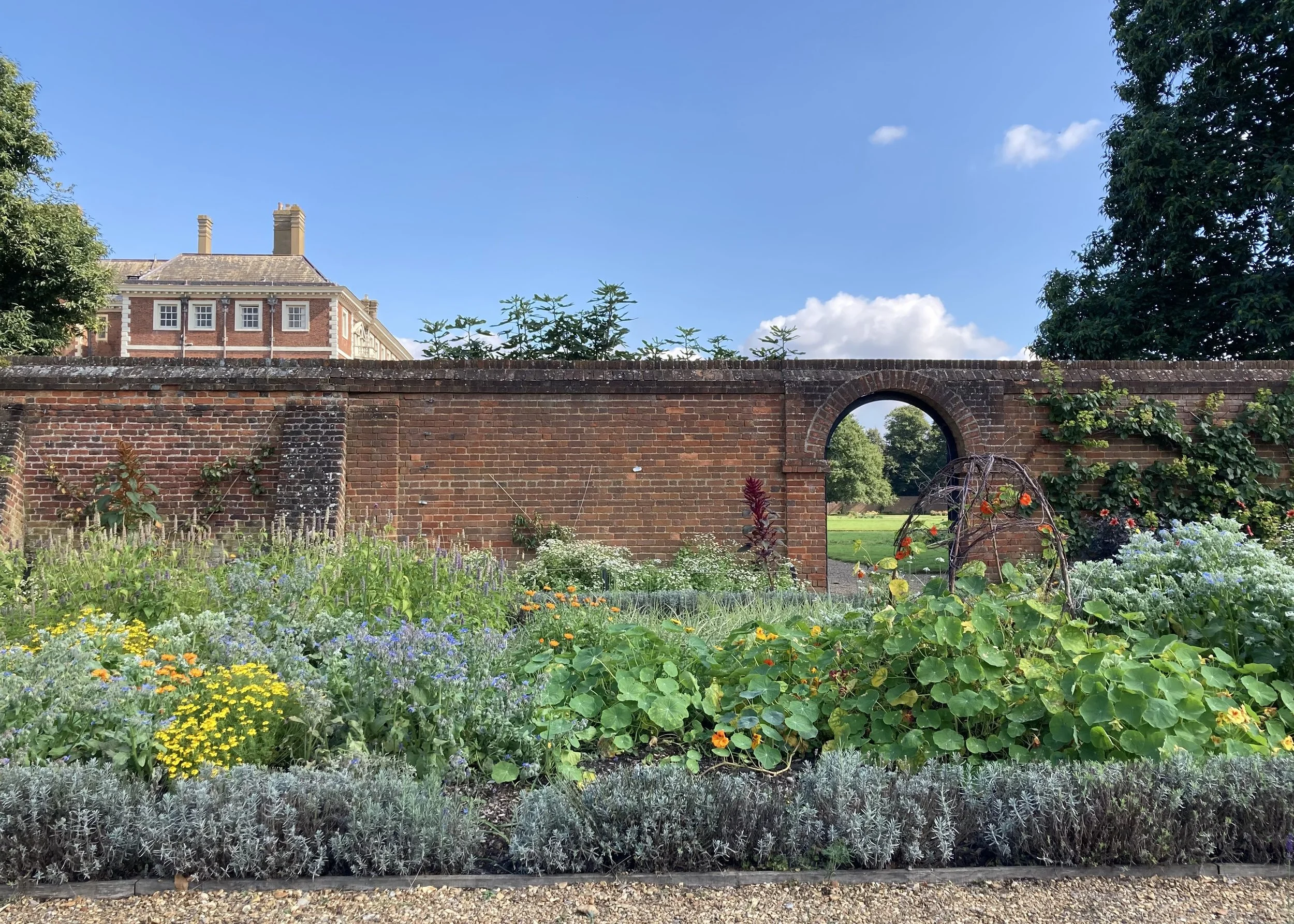
One of my favourite places to work was in the Ham House Kitchen garden
Alongside that work, we have also designed and planted private gardens across Richmond upon Thames. That combination of historic landscape knowledge and practical local project experience continues to shape how I approach gardens throughout the borough today.
Designing Gardens That Reflect Richmond’s Character
Richmond has a remarkable architectural identity. Across the borough you find Georgian villas, Victorian terraces, Edwardian family homes and historic houses dating back centuries. The most successful gardens here usually respond to that heritage and architecture rather than competing with it.
Because of this often work within the borough with materials that blend and enhance such as:
York stone
London stock brick (I’ll match or compliment the brick to the house)
traditional gravel pathways
reclaimed hard landscaping features
cast iron detailing (one day I’ll be able to do a project with an Allitex greenhouse)
traditional timber structures
These materials help gardens feel settled and timeless, particularly within conservation areas where sympathetic design is important.
For more contemporary garden projects and modern extensions in Richmond, the approach shifts slightly. Sometimes we use traditional layouts with modern detailing to connect newer architecture back into the surrounding landscape. In other gardens we do the opposite, pairing reclaimed materials with cleaner modern lines to create a balance that feels right for both the client and the property.
Good garden design should strengthen the relationship between the house, the landscape and the wider character of Richmond itself.
Garden Layouts in Richmond Upon Thames
Gardens in Richmond vary enormously in scale, from compact urban courtyards to large family gardens backing onto green space.
Privacy and structure are often two of the most important considerations. I usually approach these spaces by creating connected zones using planting, pathways and subtle level changes rather than relying on heavy division. This allows gardens to feel layered and immersive while remaining practical for everyday life.
Mature trees are another defining feature of many Richmond gardens. Wherever possible, I try to retain them because they provide instant scale, shade and ecological value that would otherwise take decades to recreate.
When designing around established trees, it is important to understand root protection zones, canopy spread and long term management, particularly within Richmond Council planning requirements and conservation areas.

Ham House front fields redesign for the national trust gardens team. Blending historic access and patterns with modern biodiversity and flood resilience.
Biodiversity and Planting in Richmond Gardens
One of the strengths of Richmond upon Thames is its connection to larger ecological systems. Between Richmond Park, Kew Gardens, Ham Lands and the Thames corridor, the borough already supports a huge diversity of wildlife and plant life. Gardens though can become an important extension of that network.
I often use layered planting, pollinator friendly species and healthier soil management techniques to create gardens that support biodiversity while still feeling elegant and considered.
This does not mean gardens need to look unmanaged or overly wild. Some of the most successful wildlife friendly gardens are highly structured spaces that simply work more naturally with seasonal change and ecological processes. By attracting a wide variety of animals into your garden you often get free pest management and who doesn’t love birdsong (well perhaps not the parakeets!)
Overall designing gardens in Richmond Upon Thames is about understanding the wider landscape, the river, the parks, the architecture and the growing conditions, and working with them rather than against them. Whether it is a complete redesign, a planting focused project or a lower maintenance family garden, thoughtful design can completely change how a space feels and functions.
If you are planning a garden project in Richmond upon Thames or the surrounding area, or would like to discuss our design led gardening services you can explore more of our work at Zoe Claymore Garden Design.